
Lonomia obliqua: World’s Deadliest Caterpillar Guide
Learn about Lonomia obliqua, the Giant Silkworm Caterpillar whose venom causes internal bleeding, acute kidney failure, and fatal blood clotting disorders.
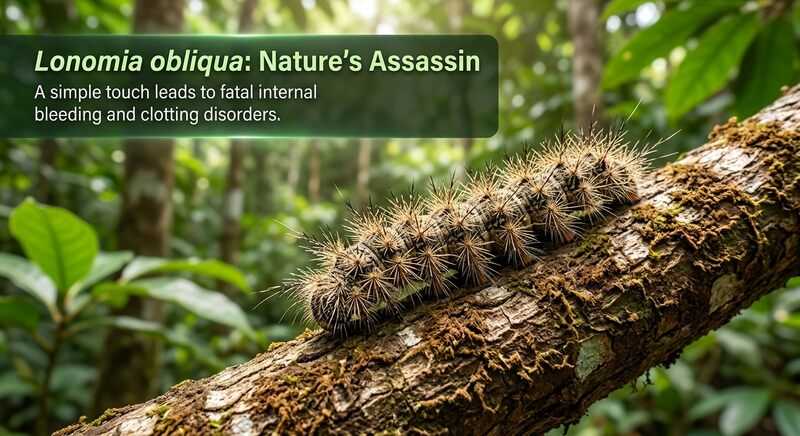
When people think of dangerous creatures, lions, snakes, or venomous spiders usually come to mind. However, hidden within the rainforests of South America lives one of the most toxic organisms on Earth: Lonomia obliqua, commonly known as the Giant Silkworm Caterpillar or “Assassin Caterpillar.” A single touch from this seemingly harmless insect can disrupt the human blood clotting system, leading to severe internal hemorrhaging and death.
What is Lonomia obliqua and Where is It Found?
Lonomia obliqua is the larval stage of a South American silk moth native to southern Brazil, Uruguay, and Argentina. These caterpillars blend seamlessly into tree bark, making accidental contact extremely common among farmworkers and outdoor enthusiasts. They carry tiny, tree-like hollow spines across their bodies, which are connected to potent venom sacs underneath their skin.
How Does Lonomia obliqua Venom Affect the Human Body?
The venom injected by Lonomia obliqua contains powerful procoagulant and fibrinolytic enzymes. Specifically, when the spines puncture human skin, the venom immediately enters the bloodstream. As a result, it triggers a severe condition known as Lonomic Anti-hemostatic Syndrome.
Physiological Effects of Venom Toxins
Destruction of Fibrinogen: First, the venom rapidly breaks down fibrinogen—a key protein required for blood clotting—thereby preventing the body from forming clots to repair damaged blood vessels.
Widespread Internal Bleeding: Consequently, victims experience spontaneous hemorrhaging from the gums, nose, digestive tract, and internal organs.
Brain and Kidney Damage: In addition, as internal bleeding progresses, patients face extreme risks of intracranial hemorrhage (brain bleeding) and acute renal failure, which can be fatal without prompt intervention.
What Are the Symptoms of a Lonomia obliqua Sting?
Generally,Symptoms typically develop within 1 to 24 hours after physical contact with the caterpillar:
Intense, burning pain and swelling at the contact site.
Additionally,severe headache, nausea, and persistent vomiting.
Unexplained bruising spreading across the skin.
Eventually,Blood appearing in urine, saliva, or stool.
What is the Medical Treatment for its Venom?”
Therefore,immediate medical care is critical for survival after exposure to Lonomia obliqua:
Specific Antivenom (Soro Antilonômico): The Instituto Butantan in Brazil developed a specialized antivenom serum that neutralizes Lonomia obliqua toxins and stops internal bleeding when administered early.
First-Aid Measures: Wash the affected skin area immediately with soap and cold water to remove residual venom. Do not rub or scratch the area, as this can press remaining venomous spines deeper into the tissue.
Medical Monitoring: Patients require blood transfusion therapies and close hospital monitoring to restore clotting factors and support kidney function.


4 thoughts on “Lonomia obliqua: World’s Deadliest Caterpillar Guide”
Comments are closed.