
Why Do Snail Shells Turn White and Empty? Calcium Science
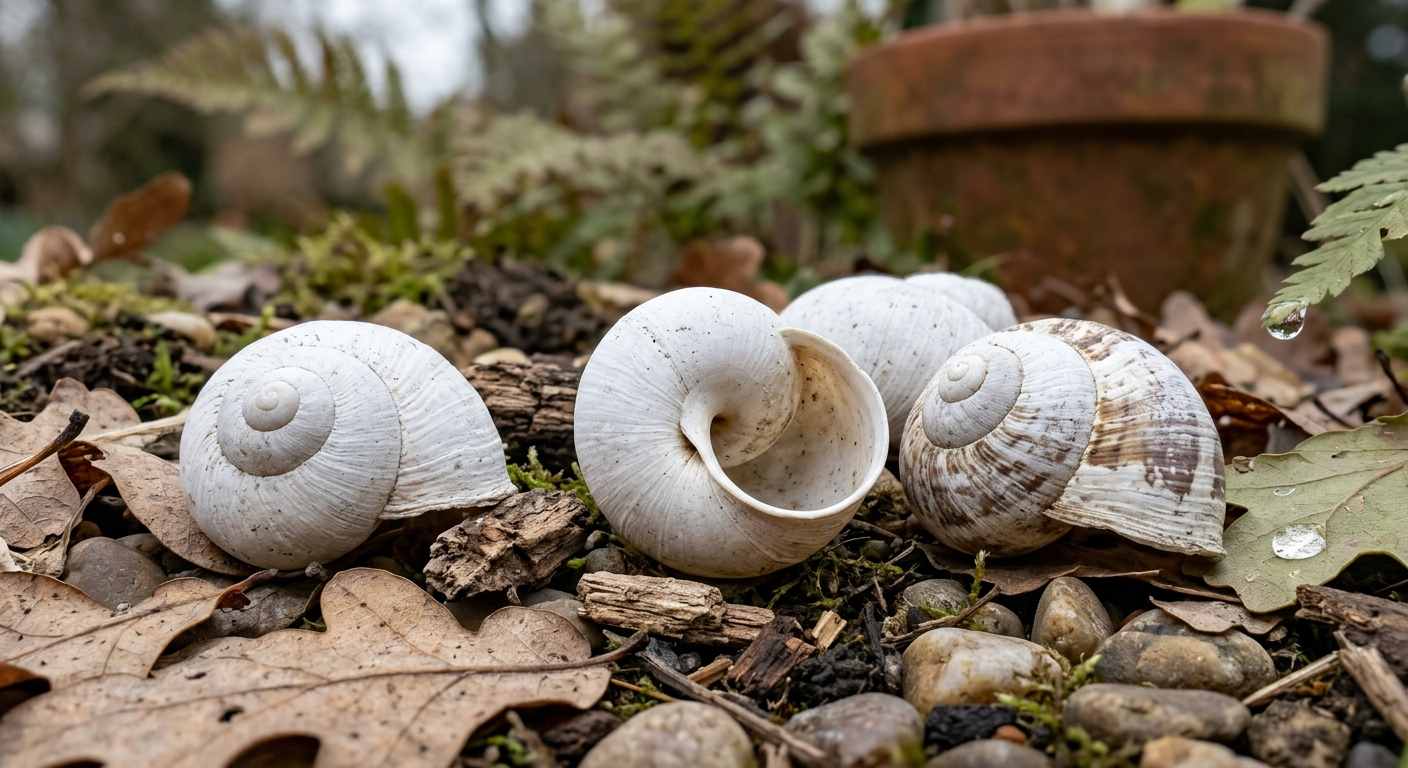
If you keep pet snails, maintain an aquarium, or explore nature, you might wonder: why do snail shells turn white and end up empty? When a living snail is healthy, its shell features rich colors, patterns, and a smooth texture. However, over time—or after a snail dies—the shell quickly fades, turns stark white, and becomes completely hollow.
Understanding why do snail shells turn white requires looking at snail shell calcium composition, natural weathering, and environmental conditions.
The Role of Calcium Carbonate in Snail Shells
To understand why do snail shells turn white, we first need to look at what a shell is made of. A snail’s shell consists of roughly 95% calcium carbonate, protected by a thin outer organic layer called the periostracum.
The Periostracum (Outer Layer): Contains pigments, dark browns, yellow stripes, and shine. It shields the calcium layers from sunlight and moisture.
The Calcium Carbonate Layers: Thick inner mineral layers that provide structural strength.
When the outer protective layer breaks down, the chalky white calcium carbonate underneath becomes visible.
Why Do Snail Shells Turn White When Empty?
When a snail dies, scavengers and bacteria quickly decompose the soft body tissue inside, leaving the shell empty. After the snail is gone, a simple chemical weathering process takes place:
Loss of Organic Protein Coating: Solar radiation and rain break down the outer periostracum layer.
Pigment Fading: UV rays bleach organic colors and patterns away.
Exposed Calcium Carbonate: Without its protective outer layer, pure calcium carbonate is exposed. In its pure mineral form, it appears bright white.
Gradual Dissolution: Rainwater and acidic soil react with the calcium carbonate, eventually dissolving the shell into powder.
Why Do Snail Shells Turn White While the Snail Is Alive?
If a living snail’s shell is turning white or flaking, it points to health or environmental issues:
Calcium Deficiency: Without enough calcium carbonate, a snail cannot maintain or repair its shell, leading to chalky white patches.
Low Water pH (Acidic Environment): Water or soil with a pH below 7.0 actively erodes calcium carbonate off living shells.
Old Age: Older snails naturally lose their outer periostracum around the spire (top tip) as they age.
If you are interested in learning more about unique creatures and their protective shells, check out our complete bug and snail guide for more habitat tips. (👈 Internal Link added here!)
How to Prevent Calcium Erosion in Live Snails
Provide Cuttlebone: Keep cuttlebone in land terrariums or freshwater tanks to give snails a direct calcium source.
Maintain Water pH: For aquatic snails, keep water pH between 7.2 and 8.2 so acidic water does not dissolve their shells.
Feed Calcium-Rich Foods: Offer kale, spinach, or specialized calcium supplements.

2 thoughts on “Why Do Snail Shells Turn White and Empty? Calcium Science”
Comments are closed.