
Itch Mite Infection: Symptoms & Scabies Guide
Have you ever experienced relentless, unbearable skin itching—especially at night? You might be dealing with an unseen microscopic invader: the Itch Mite (Sarcoptes scabiei).
While most skin conditions like dry skin or eczema are caused by environmental factors or genetics, scabies is directly caused by a tiny microscopic parasite that burrows under human skin. In this comprehensive guide, we will explore what itch mites are, how they infect human skin, early symptoms to watch for, and effective treatment options.
What is the Itch Mite (Sarcoptes scabiei)?
The Itch Mite (Sarcoptes scabiei var. hominis) is a microscopic, eight-legged parasite that belongs to the arachnid family. Measuring only about 0.3 to 0.4 millimeters in length, these organisms are completely invisible to the naked eye.
Unlike bed bugs or fleas that bite the surface of your skin, the female itch mite actually burrows into the upper layer of human skin (the stratum corneum) to live, feed, and lay eggs.
How Does an Itch Mite Infection (Scabies) Happen?
Scabies is highly contagious and spreads primarily through direct, prolonged skin-to-skin contact with an infected person. Brief contact, such as a handshake or a quick hug, rarely spreads the mites.
Common ways itch mites spread include:
Close physical contact: Living in crowded households, dormitories, or daycare facilities.
Shared personal items: Using the bedding, towels, or clothing of an infected individual.
Intimate contact: Sexual contact is one of the most frequent transmission routes among adults.
Common Symptoms of Itch Mites (Sarcoptes scabiei)
When itch mites invade your skin, your body develops an allergic reaction to the mites, their eggs, and their waste products.
Key Symptoms Include:
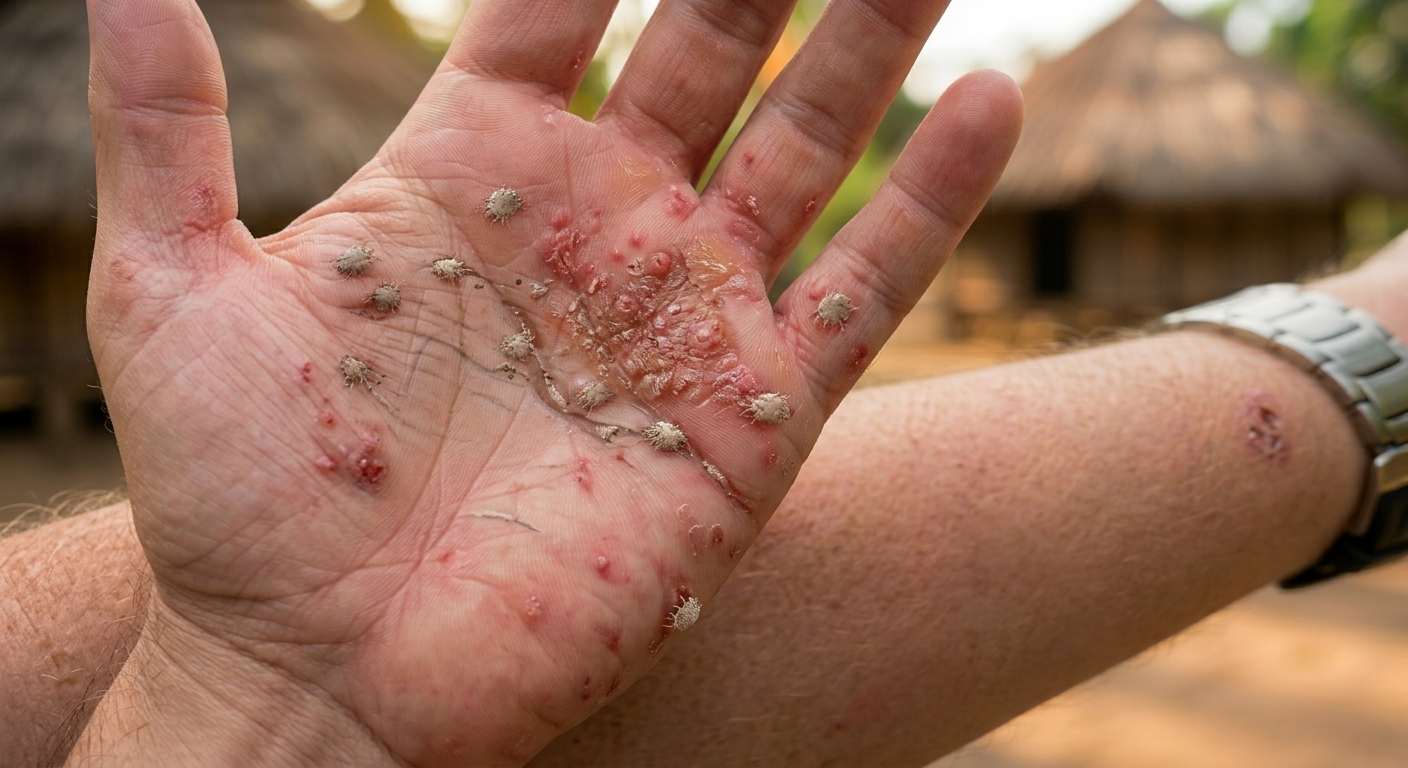
Intense Itching (Especially at Night): This is the hallmark symptom of scabies. The urge to scratch usually worsens at night when the skin is warm.
Pimple-like Rash: Small red bumps, blisters, or pimple-like eruptions appear on the skin.
Burrow Tracks: Tiny, raised, grayish-white or flesh-colored lines on the skin surface where female mites have tunnelled.
Crusting and Sores: Constant scratching can break the skin, leading to secondary bacterial infections like impetigo.
Common Infection Sites:
Between the fingers and toes
Wrists and elbows
Armpits and waistline
Around the breasts or genital areas
Buttocks
How to Get Rid of Itch Mites: Effective Treatments
Eliminating an itch mite infestation requires medical intervention—over-the-counter body washes and standard lotions are usually not strong enough to kill the mites.
1. Prescription Scabicides (Topical Treatments)
Permethrin Cream (5%): The gold-standard topical treatment. Applied from the neck down and left on overnight (8–14 hours) before washing off.
Ivermectin (Oral Medication): An oral anti-parasitic medication often prescribed for severe cases, crusted scabies, or when topical creams fail.
2. Decontaminating Your Environment
To prevent re-infestation, you must thoroughly clean your living space:
Hot Wash: Wash all clothing, bed linens, and towels used in the last 3–4 days in hot water (at least 120°F / 50°C) and dry on high heat.
Seal Non-washables: Place items that cannot be washed into a sealed plastic bag for at least 3 to 7 days. Itch mites cannot survive more than 48–72 hours away from human skin.
Vacuum Thoroughly: Vacuum carpets, rugs, and furniture.
Frequently Asked Questions (FAQs)
Can pets spread human itch mites?
No. Pets can get their own species of mites (mange), but Sarcoptes scabiei var. hominis specifically targets humans. Pet mites cannot survive or reproduce on human skin.
How long does it take for symptoms to appear?
If you have never had scabies before, symptoms can take 4 to 6 weeks to develop. If you have had it in the past, symptoms usually appear within 1 to 4 days.
Conclusion
The Itch Mite (Sarcoptes scabiei) may be tiny and hidden, but the reaction it causes is unmissable. Recognizing early symptoms like intense nocturnal itching and small burrow lines is key to getting prompt treatment and stopping the spread. If you suspect an itch mite infestation, consult a healthcare provider promptly to get prescription scabicide treatment.


One thought on “Itch Mite Infection: Symptoms & Scabies Guide”
Comments are closed.