Eye Gnats Pink Eye: Causes & Prevention
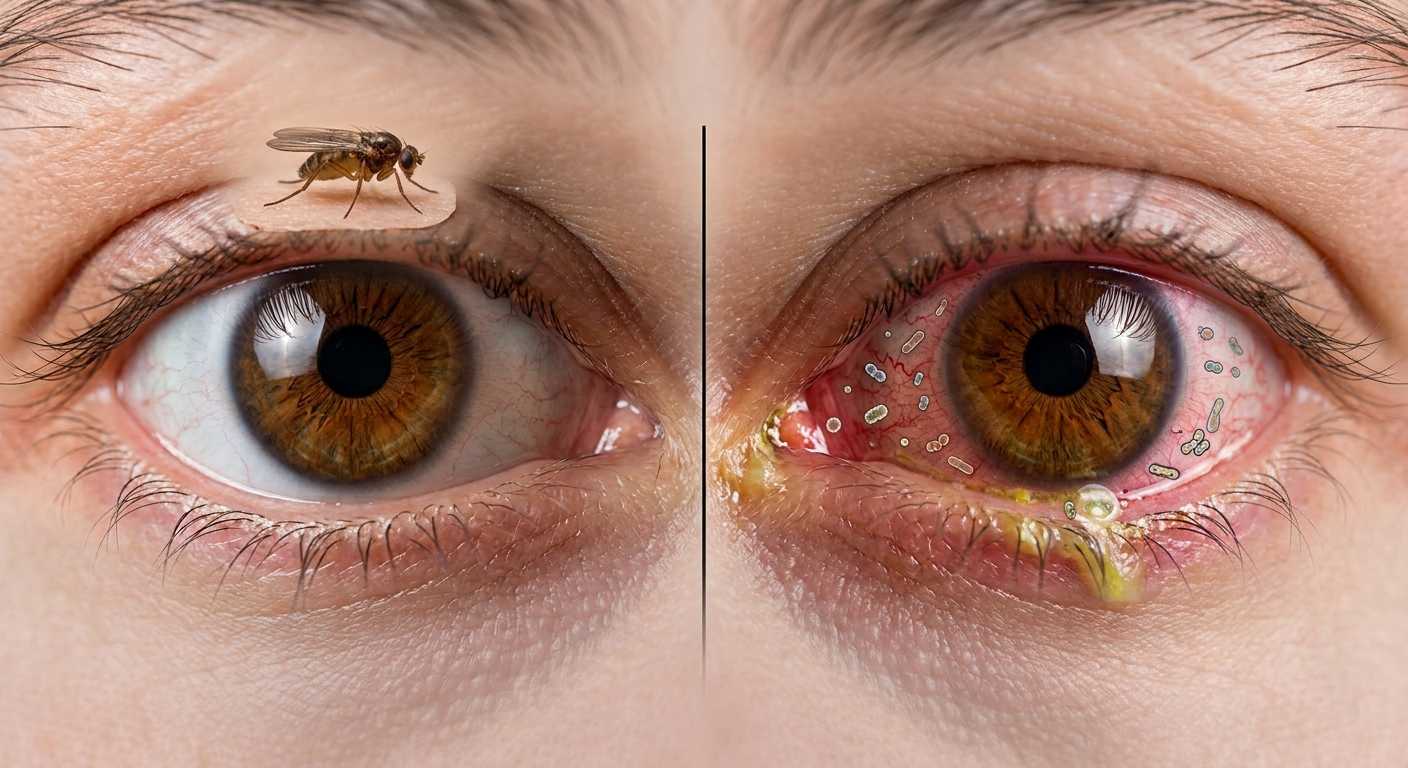
When your eyes turn red, start watering, or feel uncomfortably gritty, the immediate assumption is often a seasonal viral infection or common allergies. However, understanding the eye gnats pink eye connection reveals a frequent offender hiding in plain sight. These tiny, persistent insects are active carriers of bacteria that directly cause and spread conjunctivitis.
These tiny, persistent insects are more than just a minor nuisance—they are active carriers of bacteria that directly cause and spread conjunctivitis (commonly known as Pink Eye).
What Are Eye Gnats?
Eye Gnats belong to the family Chloropidae. Measuring only 1 to 2 millimeters in size, these minute flies thrive in warm environments and are drawn to the moisture, protein, and secretions found around human and animal eyes.
Unlike mosquitoes, eye gnats do not bite or feed on blood. Instead, they feed on fluid secretions from the eyes, nose, and open wounds.
How Eye Gnats Spread Pink Eye
While eye gnats do not directly damage the eye, their feeding habits make them highly efficient biological vectors for bacterial infections.
Pathogen Harboring: Eye gnats frequent decaying organic matter, soil, and infected fluids, picking up harmful bacteria such as Haemophilus influenzae and Streptococcus pneumoniae.
Bacterial Transfer: When an eye gnat lands on the corner of your eye to feed on tear film, it deposits these pathogens onto the conjunctiva (the clear membrane covering the white part of your eye).
Cross-Contamination: A single insect can visit an infected individual, gather bacterial discharge, and fly directly to a healthy person, causing rapid transmission within households or communities.
Common Symptoms
If you contract conjunctivitis through bacterial transmission, you may experience:
Noticeable redness or pink discoloration in the whites of the eye
Excessive tearing and watery discharge
A gritty or burning sensation, as if sand is trapped under the eyelid
Yellow or greenish crusting that seals the eyelids shut after sleeping
Sensitivity to light (photophobia)
Prevention and Control
Protecting your eyes from insect-borne conjunctivitis involves a combination of environmental control and proper personal hygiene:
Wear Protective Eyewear: Use sunglasses or safety glasses during outdoor activities, especially in warm, humid, or agricultural environments where gnats cluster.
Avoid Rubbing Your Eyes: Rubbing irritates the ocular tissue further and can push bacteria deeper into the eye. Flush with clean water or saline if an insect makes contact.
Practice Strict Hygiene: Wash your hands frequently with soap and water. Never share personal items like towels, eye makeup, or pillowcases.
Use Antibacterial Treatment: If a bacterial infection develops, consult an eye care professional. Antibiotic eye drops are typically required to clear the infection quickly and prevent complications.