
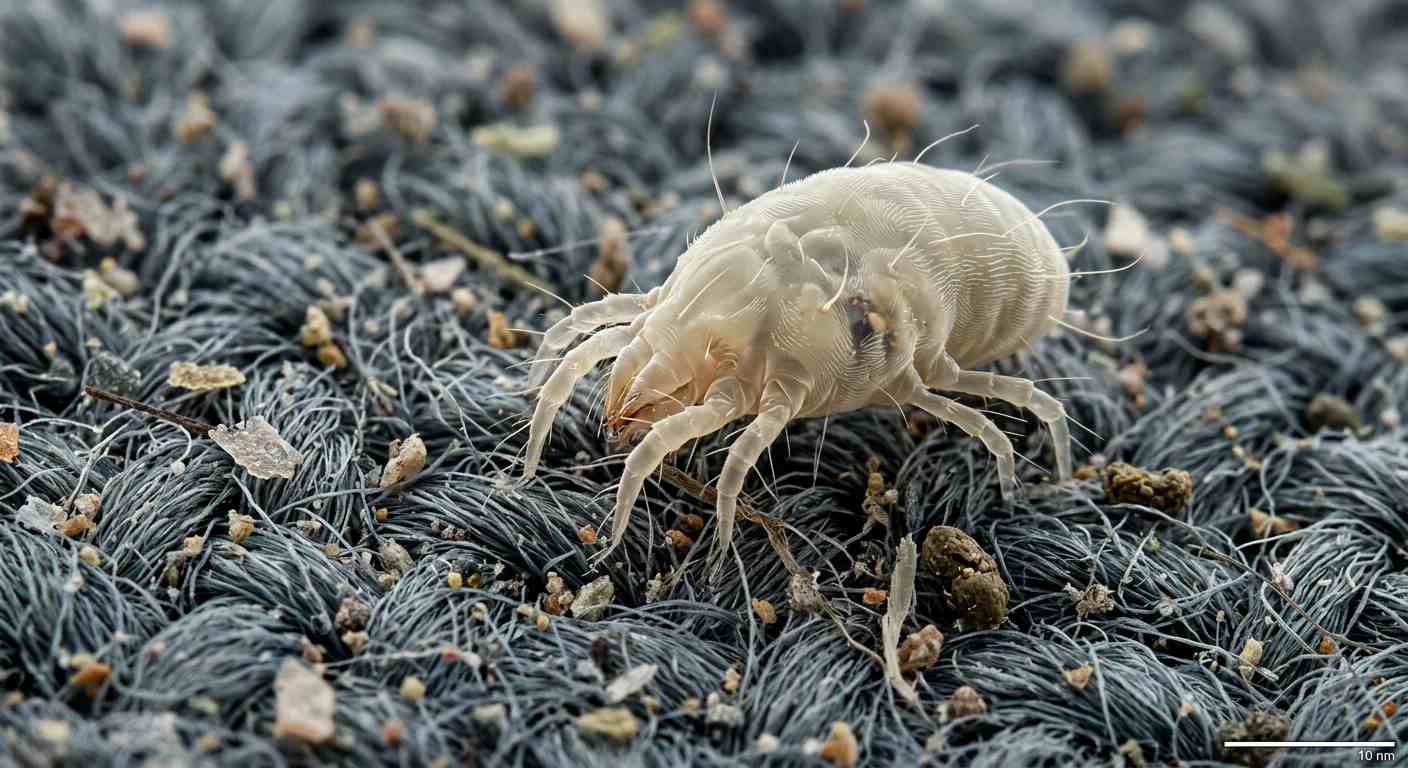
House Dust Mite: Prevention & Remedies for Bedding Allergies
House Dust Mite: Prevention & Remedies for Bedding Allergies
Do you wake up every morning with an itchy nose, watery eyes, or continuous sneezing? The hidden culprit behind your year-round allergies might be a house dust mite. These microscopic organisms thrive inside mattresses, pillows, and carpets, quietly triggering severe allergic reactions and asthma in millions of people worldwide.
What is a House Dust Mite?
A house dust mite (Dermatophagoides pteronyssinus) is a tiny, microscopic arachnid—a relative of spiders and ticks. Measuring only about 0.2 to 0.3 mm, they are completely invisible to the human eye.
Unlike bed bugs, these microscopic pests do not bite humans or feed directly on blood. Instead, they survive on dead skin cells (dander) shed naturally by humans and pets every day. While the organisms themselves are harmless, their fecal particles and decaying bodies contain potent proteins that float into the air and trigger immune responses when inhaled.
Primary Habitats of These Microscopic Pests
A house dust mite needs specific conditions to thrive, making modern indoor environments an ideal home:
Favorite Spots: Mattresses, pillows, fabric sofas, heavy curtains, and carpets.
Primary Food Source: Human skin flakes. A single person sheds enough dead skin daily to feed thousands of microscopic pests.
Ideal Environment: High humidity (above 70%) and ambient temperatures between 20°C and 25°C.
Common Symptoms of Allergy & Asthma
When house dust mite proteins enter your respiratory tract, your immune system treats them as harmful invaders, leading to chronic symptoms:
Allergic Rhinitis: Frequent sneezing, runny or stuffy nose, and itchy palate.
Asthma Triggers: Wheezing, shortness of breath, chest tightness, and persistent coughing at night.
Eye Irritation: Red, watery, or itchy eyes.
Skin Issues: Flare-ups of eczema or localized itching.
Step-by-Step Guide to Dust Mite Control
While it is impossible to eliminate these micro-organisms entirely, you can drastically lower their population and manage your symptoms effectively.
1. Protect Your Bedding
Encase your mattresses, box springs, and pillows in allergen-blocking zippered covers. These specialized covers prevent any microscopic pests from colonizing your mattress and block existing allergens from escaping.
2. Wash Bedding in Hot Water
Wash all sheets, pillowcases, and blankets weekly in hot water (at least 60°C / 140°F). High temperatures kill the house dust mite and dissolve their allergens completely.
3. Upgrade Your Cleaning Method
Dry sweeping or dusting with a dry cloth kicks allergen particles straight into the air. Instead, use a damp cloth to wipe surfaces and vacuum carpets using a HEPA-filter vacuum cleaner to trap microscopic debris.
4. Control Indoor Humidity
Keep indoor humidity levels below 50% using an air conditioner or dehumidifier. A house dust mite absorbs moisture directly from the air, so lower humidity starves them of hydration.
Final Thoughts
Living with bedding allergies can be exhausting, but simple targeted changes to your cleaning routine can make a dramatic difference. By protecting your bedding, reducing indoor humidity, and using HEPA filtration, you can keep microscopic allergens under control and enjoy clean, allergen-free air every day.
