
Crab Lice Eggs vs Head Lice: Differences & Removal
Crab Lice Eggs vs Head Lice Eggs: Microscopic Guide & Solutions
When dealing with tiny external parasites, understanding the microscopic differences between crab lice eggs and head lice eggs is essential for accurate identification and fast treatment. To the naked eye, these microscopic eggs—commonly referred to as nits—often look like small specks of dandruff or dust. However, under magnification, their structure reveals a very sophisticated biology designed to cling firmly to human hair.
In this guide, we will break down the structural traits of crab lice eggs, how to identify them under a lens, and the best actionable steps to eradicate them permanently.
What Do Crab Lice Eggs Look Like Under a Microscope?
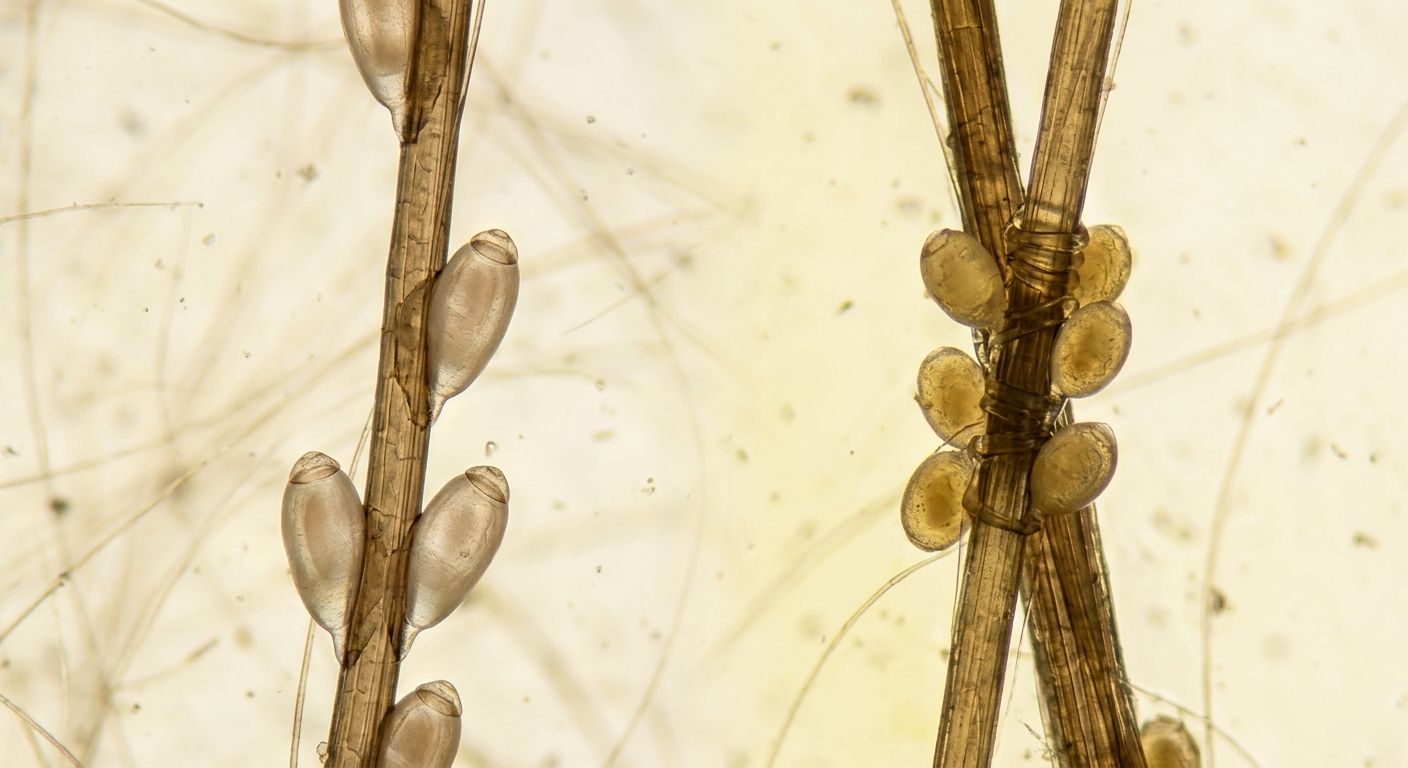
Under a microscope, crab lice eggs share a teardrop or oval shape measuring roughly 0.8 millimeters in length. Freshly laid eggs appear translucent pearl or pale yellowish-brown, while empty eggshells turn bright white after hatching.
Looking closer reveals unique features of these nits:
The Operculum (Hatching Cap): At the top of each egg lies a tiny cap called the operculum. Microscopic pores on this cap allow the developing embryo to breathe before it pushes open the lid to hatch.
Biological Glue: Female lice secrete a specialized chitin-based liquid when laying eggs. This liquid instantly hardens into a tough ring around the hair shaft, making it impossible to wash away with regular shampoo.
Key Structural Differences
While both parasites feed on human blood, their habitats and egg placement vary noticeably.
| Trait | Head Lice (Pediculus humanus capitis) | Crab Lice (Pthirus pubis) |
| Primary Location | Scalp hair, behind ears, nape of the neck. | Coarse body hair: pubic area, armpits, beard. |
| Nit Attachment | Glued to thin scalp hair shafts ~1/4 inch from skin. | Cemented tightly to thick, coarse hairs right near the skin. |
| Microscopic Shape | Slightly elongated, smooth oval capsules. | Shorter, stubbier eggs tightly wrapping thick hair. |
| Adult Appearance | Elongated body with slender legs. | Crab-like shape with large, clawed legs. |
How to Easily Tell Nits Apart From Dandruff
Many people confuse nits with regular scalp flakes. The easiest way to tell them apart is mobility:
Dandruff Flakes: Easily slide off or fall away when brushed or blown on.
Lice Eggs (Nits): Firmly cemented to the hair shaft. They cannot be shaken off and must be slid off using fingernails or a fine-toothed metal comb.
Effective Treatments for Crab Lice Eggs and Head Lice
Getting rid of both types requires a combination of chemical treatment and mechanical removal:
Use Over-the-Counter Pediculicides: Apply medicated lotions or shampoos containing Permethrin or Pyrethrins as directed.
Fine-Tothed Combing: Wet the hair, apply conditioner, and systematically comb through with a fine-toothed metal nit comb to pull out cemented eggs.
Wash High-Heat Laundry: Machine-wash bedsheets, pillowcases, and clothing used in the last 48 hours in hot water (at least 54°C or 130°F) and dry on high heat.
Treat Sexual Partners Simultaneously: Because pubic lice are primarily transmitted through close physical contact, partners should be treated at the same time to prevent re-infestation.



One thought on “Crab Lice Eggs vs Head Lice: Differences & Removal”
Comments are closed.