
Centipede Facts: Venom, Habitat, and Types Guide
Learning important centipede facts reveals how fascinating these multi-legged invertebrates really are. Despite their name, no centipede actually has exactly 100 legs—they always have an odd number of leg pairs, ranging from 30 to over 300. Belonging to the class Chilopoda, these multi-legged carnivores are skilled nocturnal hunters equipped with specialized venom delivery tools.
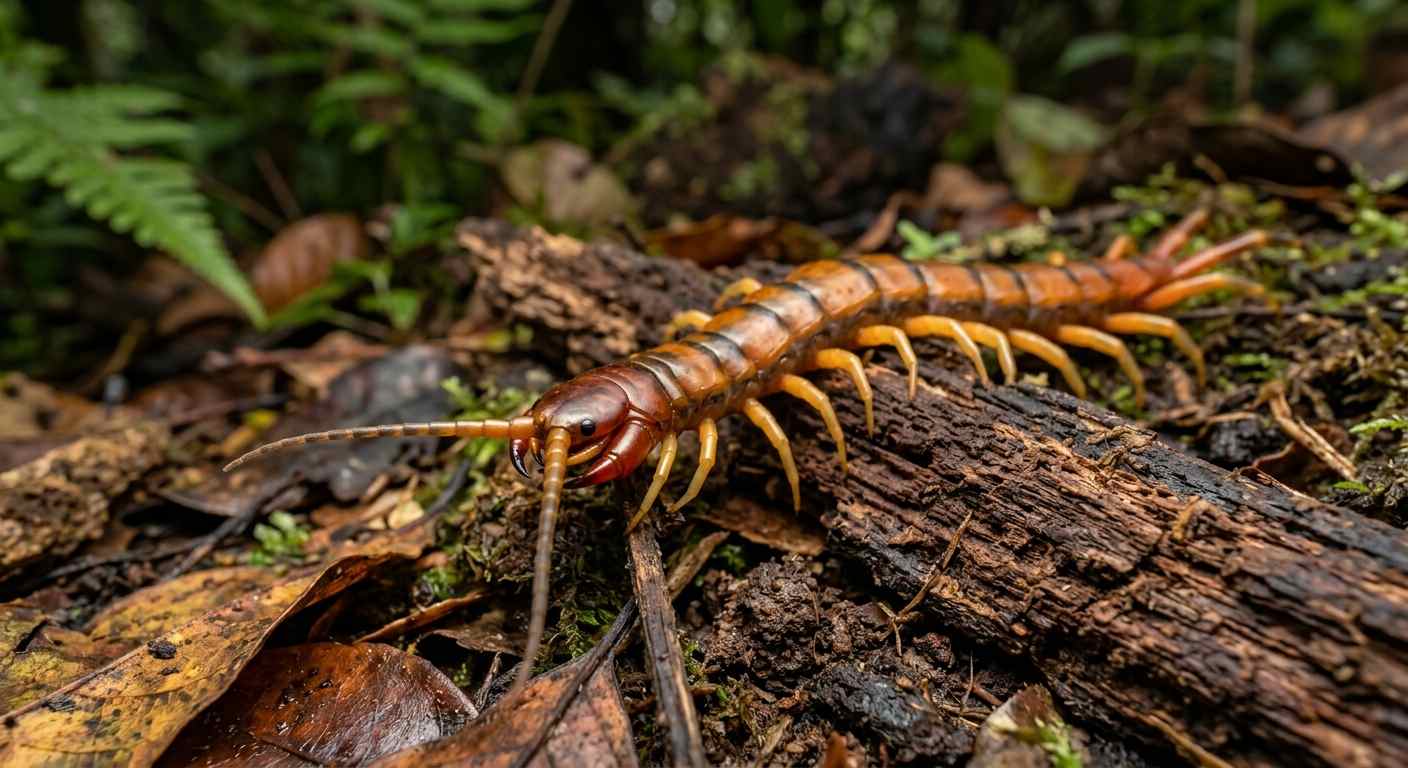
Alt text: Centipede facts showing Amazonian giant centipede venom anatomy
Key Centipede Facts and Biological Traits
Distinct Body Structure: Centipedes have flat, segmented bodies, where every segment bears a single pair of legs.
Forcipules (Venom Claws): Modified front legs located near the head act as pincers connected directly to venom glands.
Nocturnal Predators: They rely on sensitive antennae rather than vision to track down prey in total darkness.
Moisture Dependency: Lacking a waxy cuticle on their exoskeleton, they dry out quickly and must stay in damp environments.
Centipede Venom and Hunting Style
Centipedes use venom primarily to paralyze prey such as insects, spiders, small lizards, and mice.
Mechanism: Centipedes pierce their victim’s exoskeleton using their forcipules and inject a complex mixture of neurotoxins, histamines, and enzymes.
Human Impact: For humans, most centipede bites result in localized pain, redness, and swelling similar to a bee sting.
Severe Cases: Bites from giant species cause intense pain, muscle necrosis, and, in rare instances, severe allergic reactions.
Major Centipede Species and Types
Understanding different species is essential when learning centipede facts:
Amazonian Giant Centipede (Scolopendra gigantea): Reaching up to 30–35 cm in length, this species lives in South American rainforests. It is the world’s largest centipede and is capable of catching bats mid-flight.
House Centipede (Scutigera coleoptrata): Growing up to 2.5–5 cm, it is found globally in damp basements and indoors. It moves extremely fast, is harmless to humans, and eats common household pests.
Bark Centipede (Scolopocryptops): Measuring 5–8 cm long, it lives under decaying tree logs and soil. It lacks eyes entirely, relying strictly on physical vibrations to catch prey.
Feather-Tailed Centipede (Alipes grandidieri): Found in East Africa, it grows to 10–15 cm and features flattened tail legs that produce a loud warning sizzle sound when threatened.
Essential Centipede Facts Regarding Defense Mechanisms
Centipedes utilize several unique biological adaptations beyond venom to escape predators like birds, amphibians, and small mammals:
Autotomy: If trapped by a predator, a centipede can intentionally drop a leg to distract the attacker and escape, regenerating the lost limb during its next molt.
Chemical Deterrents: Certain subterranean species release sticky, toxic fluids from glands along their ventral body segments when threatened.
Speed & Agility: Their low center of gravity and lateral leg positioning allow rapid, zigzag movement into narrow crevice shelters.
Natural Habitat and Environmental Conditions
Centipedes thrive in dark, humid environments across terrestrial ecosystems worldwide, including tropical rainforests, deserts, temperate forests, and caves. They spend daylight hours hidden beneath decaying logs, tree bark, fallen leaves, rocks, and damp basements.
Understanding these centipede facts helps us appreciate their vital role in controlling pest populations within natural ecosystems.



One thought on “Centipede Facts: Venom, Habitat, and Types Guide”
Comments are closed.